Fluxon Motor
Choosing the right drive can determine whether a production line runs smoothly or struggles under pressure. A Heavy Duty Gear Motor is designed for demanding applications, including conveyors, mixers, crushers, hoists, and packaging equipment. These systems often face continuous loads, sudden starts, dust, vibration, and limited maintenance access.
Reliability expert Heinz P. Bloch wrote, “Reliability must be designed into machinery, not inspected into it.” This principle explains why motor selection should begin with operating conditions, not catalog size. Engineers must examine required torque, gearbox ratio, duty cycle, starting frequency, ambient temperature, and installation position. A motor that survives a laboratory test may still fail beside a hot, dusty conveyor.
Details matter.
A properly selected Heavy Duty Gear Motor can reduce overheating, unexpected stoppages, and premature gear wear. Features such as hardened gears, robust bearings, effective seals, and suitable thermal protection support longer service. However, a larger motor is not automatically the wiser choice. Oversizing can increase purchase cost, energy use, and mechanical stress. Undersizing is worse, but neither decision is perfect without accurate load data.
Real experience often exposes missing information. Operators may know the conveyor’s weight but not its peak starting torque. Maintenance teams may report noise without recording temperature or vibration. That uncertainty deserves attention. Comparing manufacturer specifications, service factors, warranty terms, and local technical support can produce a more dependable decision.
This guide explores why businesses choose Heavy Duty Gear Motor systems, where they deliver measurable value, and which selection mistakes deserve a second look. The goal is practical performance, not impressive specifications alone.
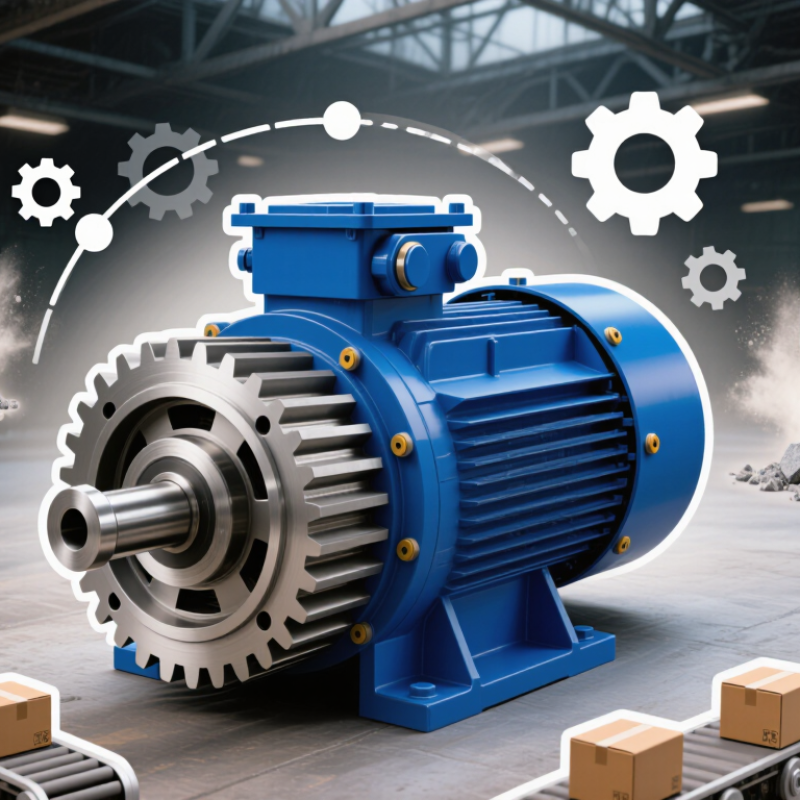
A heavy-duty gear motor is an integrated drive unit built for high torque and demanding operating conditions. It combines an electric motor with a gearbox, which reduces speed while increasing usable turning force. The motor creates motion. The gears control it.
Unlike a standard drive, this equipment usually includes stronger gears, reinforced bearings, durable housings, and improved heat control. These features support conveyors, mixers, lifting systems, packaging lines, and other machines that face repeated loads. Not just larger. A heavy-duty design must also manage shock, vibration, long duty cycles, and frequent starts.
In practical equipment assessments, the correct choice begins with measurable data. Check the required output torque, operating speed, load pattern, start-up demand, mounting position, and surrounding temperature. Dust and moisture matter too. Load data matters.
A higher-rated motor is not automatically the safer option. Oversizing can increase purchase cost, energy use, and mechanical stress.
Maintenance teams should inspect oil levels, unusual noise, rising temperatures, loose mounts, and gear wear. A quiet motor can still hide a developing problem. This is where specifications can become imperfect in real workplaces; actual loads may change during production.
Recording operating conditions helps engineers adjust service factors and replacement intervals. Choosing a gear motor is therefore less about appearance and more about matching verified performance to the machine’s daily burden.
A heavy-duty gear motor combines an electric motor with a reduction gearbox. The motor spins quickly, often at 1,500 or 1,800 revolutions per minute. Gears reduce that speed and multiply torque at the output shaft. A 20:1 ratio can deliver roughly twenty times the motor’s theoretical torque, before efficiency losses. Real performance is lower. Friction, heat, and seal resistance matter.
Inside the gearbox, hardened gears transfer force through meshing teeth. Bearings support the shafts, while oil or grease limits wear between contact surfaces. The output torque depends on motor power, gear ratio, efficiency, and service factor. A conveyor starting with a full load needs more torque than one running empty. That detail is often missed. The U.S. Department of Energy reports that motor-driven systems use about 69% of industrial electricity in the United States. The International Energy Agency also identifies motor systems as major global electricity users. Better matching can therefore reduce wasted energy. Gearbox alignment matters too. A small offset can create vibration, noise, and premature bearing failure. In workshop applications, an oversized unit may seem safer, but it can increase cost and operating losses. My practical caution is simple: calculate starting torque, duty cycle, shock loads, and ambient temperature before selecting the motor. Manufacturer curves and ISO 6336 gear calculations provide stronger evidence than guesswork. A gear motor works hard, but not magically.
| Data Dimension | Typical Heavy-Duty Gear Motor Information | Business and Operating Relevance |
|---|---|---|
| Basic Function | Combines an electric motor with a gearbox | The motor supplies rotational energy, while the gearbox reduces speed and increases usable torque for equipment such as conveyors, mixers, hoists, feeders, and material-handling systems. |
| How It Works | Motor rotation passes through meshing gears | The gear ratio determines the relationship between output speed and torque. A higher reduction ratio generally produces lower output speed and higher output torque, subject to the gearbox efficiency and load limits. |
| Common Gearbox Types | Helical, bevel-helical, planetary, worm, and helical-worm | Helical and bevel-helical designs are commonly selected for efficient continuous-duty applications. Planetary designs are used when high torque density is important, while worm gearboxes are useful where compact right-angle transmission or high reduction is required. |
| Typical Output Speed | Approximately 5–500 revolutions per minute (rpm) | The required speed depends on the driven machine. Lower speeds are suitable for heavy conveyors and mixers, while higher speeds may be appropriate for pumps, fans, or processing equipment. |
| Typical Output Torque | Approximately 50–100,000 newton-metres (N·m), depending on size and design | Torque must be selected above the application’s continuous and peak demand. Starting torque, shock loads, duty cycle, and service factor should be considered before specifying a unit. |
| Motor Power Range | Common industrial sizes range from about 0.12–500 kilowatts (kW) | The appropriate power rating depends on load torque, operating speed, acceleration time, ambient conditions, and the number of operating hours per day. |
| Duty Capability | Often designed for continuous industrial operation, commonly classified as S1 duty | A continuous-duty rating supports applications that run for extended periods. Intermittent, reversing, or frequently starting applications may require a different duty rating and additional thermal capacity. |
| Efficiency Considerations | Varies by motor efficiency, gearbox type, reduction ratio, lubrication, and load | Higher efficiency can reduce energy consumption and operating heat. Helical and planetary gearboxes generally provide high transmission efficiency, while worm gear efficiency can vary significantly with ratio, speed, and lubrication. |
| Housing and Protection | Industrial housings are commonly made from cast iron or aluminum; ingress protection ratings such as IP55 or higher are widely used | Cast iron provides strong mechanical protection for demanding environments. The required IP rating should match exposure to dust, water, washdown, and process contaminants. |
| Thermal Management | Heat is managed through housing surface area, cooling fans, oil, or other cooling arrangements | Excessive heat can shorten lubricant and bearing life. Ambient temperature, mounting position, ventilation, and load profile should be checked during selection. |
| Shock and Overload Resistance | Heavy-duty units typically use robust gears, shafts, bearings, and housings for demanding loads | These features help manage starting loads, impact loading, and frequent production cycles. An application service factor is still required because no gearbox is suitable for unlimited overload. |
| Maintenance Requirements | Periodic inspection of lubricant, seals, bearings, fasteners, alignment, and vibration | Routine maintenance can help identify lubricant degradation, leakage, misalignment, and bearing wear before they cause unplanned downtime. |
| Noise and Vibration | Influenced by gear geometry, manufacturing accuracy, lubrication, alignment, and operating speed | Lower noise and vibration can improve workplace conditions and help protect connected equipment. Unusual changes in vibration or sound may indicate a developing mechanical fault. |
| Control Compatibility | Can be operated with direct-on-line starters, soft starters, or variable frequency drives (VFDs) | A VFD can provide adjustable speed, controlled acceleration, and reduced mechanical stress. Motor insulation, cooling, braking, and drive compatibility should be verified before use. |
| Typical Applications | Conveyors, crushers, mixers, pumps, hoists, elevators, packaging lines, and material-handling equipment | These applications benefit from controlled speed, reliable torque transmission, compact installation, and the ability to operate under continuous or demanding load conditions. |
| Key Selection Criteria | Load torque, output speed, motor power, gear ratio, service factor, mounting position, environment, and duty cycle | Correct sizing improves reliability and energy performance. Selecting only by motor power can result in insufficient torque, overheating, excessive wear, or premature gearbox failure. |
| Primary Business Benefits | High torque transmission, compact drive design, reliable operation, and simplified installation | A correctly specified heavy-duty gear motor can support production continuity, reduce mechanical complexity, improve process control, and lower the risk of downtime related to unsuitable drive components. |
Note: Performance ranges are general industrial reference values. Actual ratings depend on the gear motor design, operating conditions, load profile, installation, and applicable technical standards.
Why Choose a Heavy Duty Gear Motor for Your Business?
Mining and quarrying operations depend on heavy-duty gear motors for crushers, feeders, conveyors, and screening equipment. These machines face dust, vibration, shock loads, and long operating hours. A suitable motor delivers controlled torque when moving heavy rock or loaded belts. Sealed housings and strong bearings also reduce damage from harsh surroundings.
Construction and cement plants use these motors in mixers, batching systems, elevators, and material conveyors. Steel mills and metal-processing facilities need them for roller tables, coil handling, and cutting lines. Ports and logistics centers rely on geared drives for container conveyors, hoists, and automated storage equipment. These applications demand steady movement, accurate speed control, and reliable stopping under changing loads.
Agricultural processing plants use heavy-duty units in grain conveyors, feed mixers, and harvesting equipment. Wastewater facilities may install them in screens, sludge systems, and slow-speed agitators. Food-processing plants can also require them, but washdown resistance and hygienic design become critical. A common mistake is selecting a motor by peak torque alone. That shortcut may ignore duty cycles, start-stop frequency, ambient temperature, or belt tension. Maintenance records often reveal the real problem: incorrect sizing, poor alignment, or delayed lubrication. Engineers should review the full load profile before specifying a drive. Even then, field conditions can change. Dust levels rise, loads vary, and operators adapt equipment in unexpected ways.
Why Choose a Heavy Duty Gear Motor for Your Business?
What Benefits Do Heavy-Duty Gear Motors Provide?
Heavy-duty gear motors deliver high torque in compact industrial systems. They help conveyors, mixers, hoists, and packaging lines start smoothly under heavy loads. Torque matters. Their geared reduction also controls speed more accurately than many direct-drive arrangements. This can reduce sudden movement, product damage, and mechanical stress during daily operation.
Reliability is another practical benefit. Heavy-duty housings, sealed bearings, and stronger gear teeth resist dust, vibration, and repeated shock loads. The U.S. Department of Energy reports that motor systems represent more than half of industrial electricity consumption. Therefore, correct sizing, efficient transmission, and reduced stoppages can influence operating costs significantly. The International Energy Agency has similarly estimated that electric motor-driven systems consume roughly half of global electricity. Small efficiency gains matter at scale.
However, the choice is not automatic. A larger motor may waste energy when the load is consistently light. Oversized gearing can also increase purchase costs and reduce efficiency. Engineers should examine torque, duty cycle, ambient temperature, mounting position, and maintenance access. In field applications, I have seen minor alignment errors create major vibration problems. That lesson is easy to overlook. ISO 10816 vibration guidance and IEC motor-efficiency standards provide useful reference points, but real operating conditions still require testing. A heavy-duty gear motor performs best when its design matches the actual load, not an imagined worst case.
Heavy-duty gear motors convert motor speed into higher output torque, helping conveyors, mixers, hoists, and material-handling systems move heavy loads at controlled speeds.
Example calculation based on a 2.2 kW motor and 90% drivetrain efficiency: Torque (Nm) = 9550 × Power (kW) × Efficiency ÷ Speed (rpm). Lower output speed produces higher torque, which is useful for demanding industrial applications.
Why Choose a Heavy Duty Gear Motor for Your Business?
How Should Businesses Choose the Right Gear Motor?
Choosing a heavy duty gear motor should begin with the application, not the catalog price. Define the required output speed, continuous torque, peak load, and operating hours. A conveyor moving wet aggregate needs different protection from a packaging machine in a clean, dry room. Check the starting torque carefully. It can exceed running torque by a wide margin. Also consider mounting space, shaft direction, noise limits, and available voltage.
Tips: Record real load conditions for several operating cycles. Include starts, stops, jams, and idle periods. Ask for thermal ratings, service factors, efficiency data, and maintenance intervals. Confirm the enclosure rating and lubrication method for dust, moisture, or washdown areas. The motor should not run near its limit every day. That often shortens its useful life.
A reliable selection also requires checking the driven equipment, coupling, brake, and control system together. A gearbox may deliver enough torque, but an undersized shaft or poor alignment can still cause failure. Review the manufacturer’s technical documents and request calculated duty performance. Independent testing or qualified engineering advice adds confidence for critical machinery. Cost matters, but replacement labor and lost production matter too. I would rather accept a slightly larger unit than trust an optimistic load estimate. Still, oversizing everything wastes energy and may create poor control. Recheck the assumptions before ordering.
It combines an electric motor with a reduction gearbox. The motor spins quickly, while gears reduce speed and increase output torque. Torque matters.
Meshing gears transfer force through hardened teeth. A 20:1 ratio can greatly increase theoretical torque, but friction and heat reduce actual output.
They support conveyors, mixers, hoists, and packaging lines. These systems often need smooth starts under heavy loads. Some loads are surprisingly demanding.
The motor must handle starting torque, running torque, duty cycles, and shock loads. An oversized unit may cost more and waste energy.
Motor power, gear ratio, efficiency, load weight, temperature, and operating time all matter. A full conveyor needs more starting torque than an empty one.
Yes. Gear reduction provides slower, more controlled movement than many direct-drive setups. This can reduce sudden motion, product damage, and mechanical stress.
Even a small shaft offset can cause vibration, noise, and bearing damage. The problem may begin quietly. Later, repairs become expensive.
Inspect lubrication, seals, bearings, mounting bolts, and unusual sounds. Check access before installation. That practical detail is easy to miss.
Not always. Light, inconsistent loads may operate inefficiently with oversized motors or gearing. I would calculate the real load before deciding.
Compare torque curves with the actual load and starting conditions. Consider ambient temperature, mounting position, shock loads, and maintenance space. Guesswork is risky.
A Heavy Duty Gear Motor is an industrial drive system designed to deliver reliable torque, stable speed control, and long-lasting performance under demanding operating conditions. It combines an electric motor with a gear reduction unit, allowing equipment to handle heavy loads more efficiently than a standard motor. By reducing rotational speed and increasing output torque, it supports smooth, controlled movement in applications that require consistent power and durability.
Industries such as manufacturing, material handling, mining, agriculture, construction, and processing often depend on heavy-duty gear motors for conveyors, mixers, lifting systems, and automated machinery. Their key benefits include high load capacity, improved energy efficiency, dependable operation, and reduced maintenance needs. To choose the right model, businesses should evaluate load requirements, operating speed, duty cycle, installation space, environmental conditions, and control options. Selecting a motor that matches the application can improve productivity, safety, and long-term operating value.